Healthcare Systems & Hospital Training
The Crisis in Healthcare
- Burnout rates approaching 50% among physicians and 30-40% among nurses
- Secondary traumatic stress from sustained exposure to patient suffering
- Compassion fatigue leading to turnover and reduced care quality
- Limited tools for immediate crisis intervention when patients are in acute distress
- Moral injury from feeling unable to truly help
The Critical Need
The Solution
Dr. Carolle Jean-Murat, MD, FACOG, offers customized one-day emotional trauma-release training for healthcare professionals exposed to sustained stress or acute traumatic events.
This work supports physicians, nurses, and the healthcare team by providing:
- Immediate nervous system stabilization
- Prevention of secondary trauma and burnout
- Practical tools usable during real-world stress
- Emotional regulation without long-term therapy models
The program includes structured teaching, practical demonstrations, and a professional training manual provided to all attendees.
When healthcare professionals are emotionally regulated, patient care improves, communication becomes clearer, and teams function more effectively even in high-stress clinical environments
Who This Training Is For
What Your Staff Will Learn and Experience
DCIRT (Dr. Carolle's Instant Reset Technique) - 30 seconds
DCIAM (Dr. Carolle's Instant Anti-Distress Method) - 3 breaths
DCSRT (Dr. Carolle's Self-Reset Technique) - 30 seconds
METRT (Murat Emotional Trauma Release Technique) - 2-3 minutes
Note: DCIRT and DCIAM are always used together for trauma situations. DCSRT addresses non-trauma stress and overwhelm.
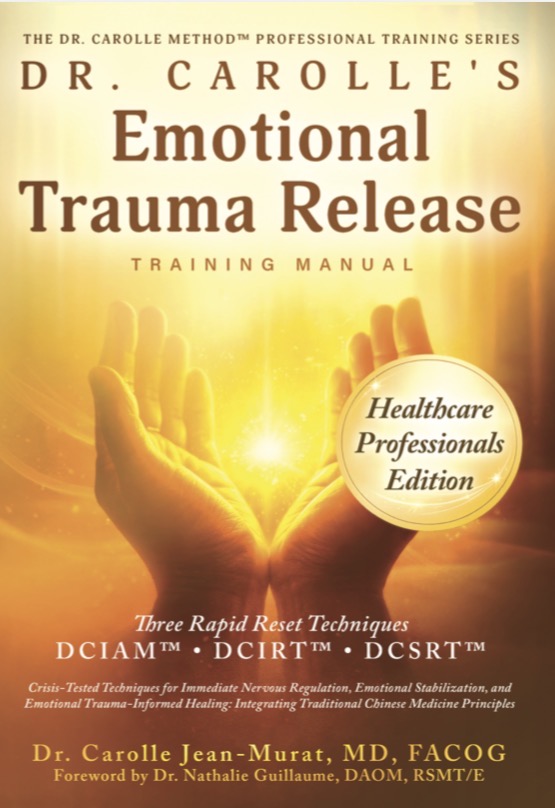
Professional Training Materials Provided to All Attendees
Training Format
Duration: 4+ hour intensive workshop
Capacity: 20-30 participants per session (scalable based on demand)
Location: Your facility (auditorium, conference space, or training room)
Structure: Personal experience of techniques, hands-on practice, clinical integration training, and optional individual METRT sessions during breaks
Flexible scheduling: Single large event, multiple departmental sessions, or phased rollout
Hands-on practice with peers under expert guidance.
Experiential Practice, Human Presence & Prevention of Helplessness
The training emphasizes:
- Establishing calm, grounded presence
- Making attuned, respectful eye contact
- Using gentle, supportive touch when clinically and professionally appropriate
- Recognizing nervous system cues in real time
- Responding with confidence rather than emotional withdrawal
Dual Benefit
- Prevention of vicarious trauma accumulation that leads to burnout and early career exit
- Personal experience of nervous system regulation and emotional release
- Restoration of their capacity to remain present with suffering without absorbing it
- Recovery of the empathy and compassion that brought them to this work. When they leave this training, they will be both personally restored and professionally equipped, able to support others with presence rather than depletion.
Enhanced Clinical Effectiveness:
- Immediate, practical interventions for patients in acute distress
- Tools they can use in their very next patient encounter
- Ability to teach patients self-regulation tools they can use independently